
Reuse the foundation that already works
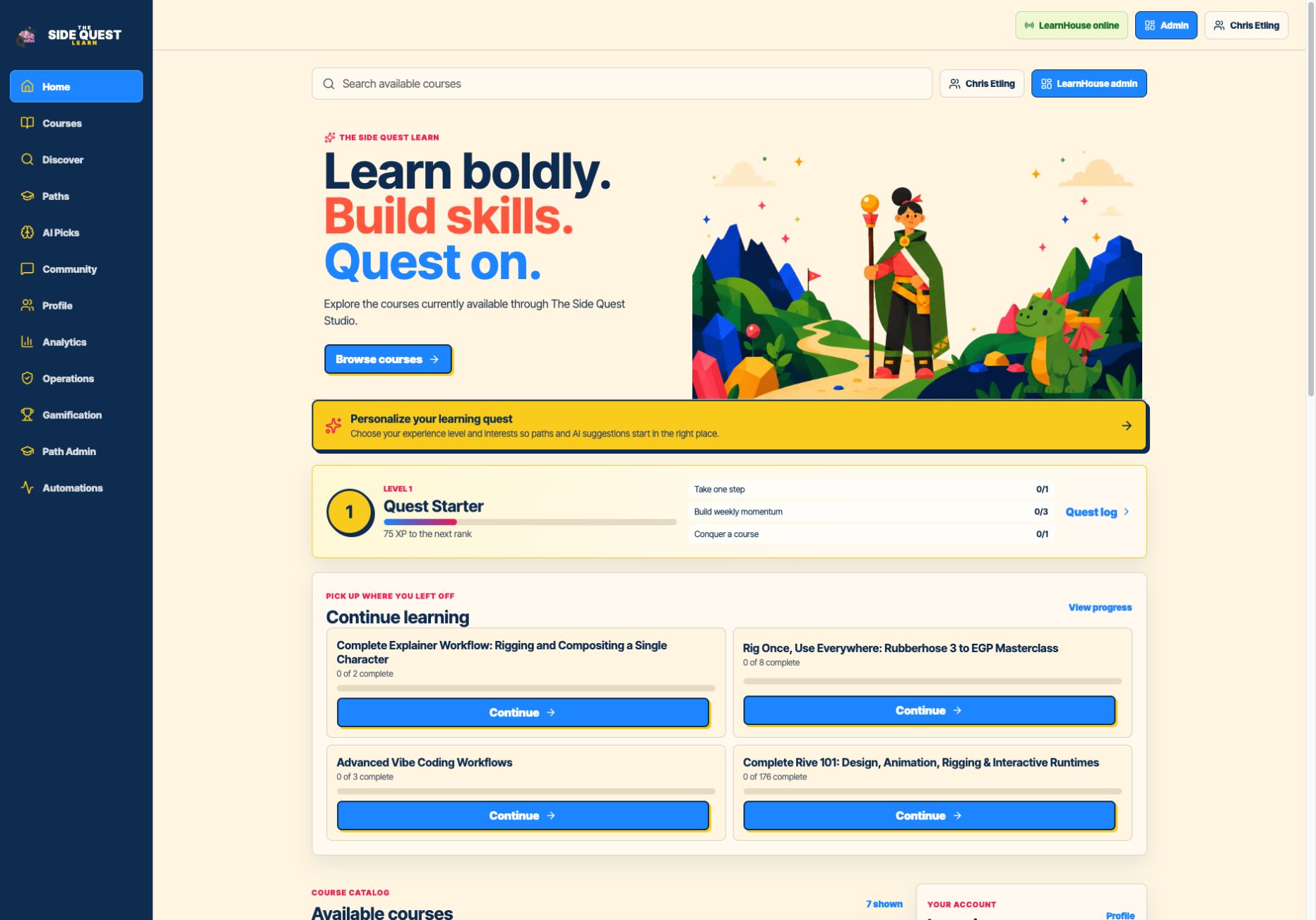
The platform uses LearnHouse as a foundation instead of rebuilding commodity learning-management behavior. The custom work concentrates on the product layer that reflects the actual learning operation: content pathways, public presentation, signals, analytics, and future intelligence workflows.
Separate the public story from operations
A public overview can explain the platform's purpose without exposing sign-in behavior, administrative routes, learner data, internal status, or infrastructure. This boundary improves both security and the clarity of the product story.
- Public pages explain the learner and team value
- Authenticated routes handle operational work
- Private data stays out of public registries and analytics
- Status and health checks remain operational surfaces, not marketing pages
Analytics should help someone decide
Event collection is useful only when it can inform a real decision. A learning intelligence layer should define the questions first, then collect the smallest set of signals that can answer them. That also reduces the risk of collecting sensitive or irrelevant data.
Intelligence is a roadmap, not a label
Future intelligence features should be tied to specific supported workflows: identifying a content bottleneck, surfacing a meaningful learner pattern, or helping a human decide what to review. The current public page describes that direction without claiming autonomous capabilities that are not yet active.