Useful infrastructure for learning teams

Custom Learning Platforms & Instructional Design Tools

Connect course content, learner progress and the tools your team uses every day. SideQuest Studio develops custom learning platform interfaces and focused instructional design tools.

Who this is for

  • Learning teams outgrowing disconnected authoring and reporting workflows
  • Instructional designers who need a purpose-built utility
  • Organizations exploring a custom learning platform or intelligence layer

Problems this can solve

  • Content, learner signals, and operational decisions live in separate systems
  • Generic platforms do not support the team's actual workflow
  • Manual production steps consume time that should go to design and review
  • Analytics exist but do not help people decide what to improve

Types of experiences

  • Custom learning platforms and public product layers
  • Learning analytics and intelligence workflows
  • xAPI and LRS integration design where supported
  • Tools for instructional designers
  • AI-assisted content and scenario workflows
  • Social-learning and custom workflow prototypes

How the work moves

  1. Map the current content, people, decisions, and systems
  2. Identify the smallest useful product layer or tool
  3. Design the data and permission boundaries before exposing features
  4. Build against real workflows and representative content
  5. Instrument meaningful events and document operations

Tools and technologies

  • React and modern web interfaces
  • LearnHouse foundations
  • Node and Python services
  • PostgreSQL and structured content
  • Docker-based deployment
  • Learning analytics and xAPI integration patterns

Build around the workflow your team actually uses

Start by mapping where content is created, where it is published and how someone decides what to improve. A small tool that removes a repeated handoff can be more useful than a complete platform replacement. Existing authentication, data ownership and permissions shape the design.

See a working learning platform

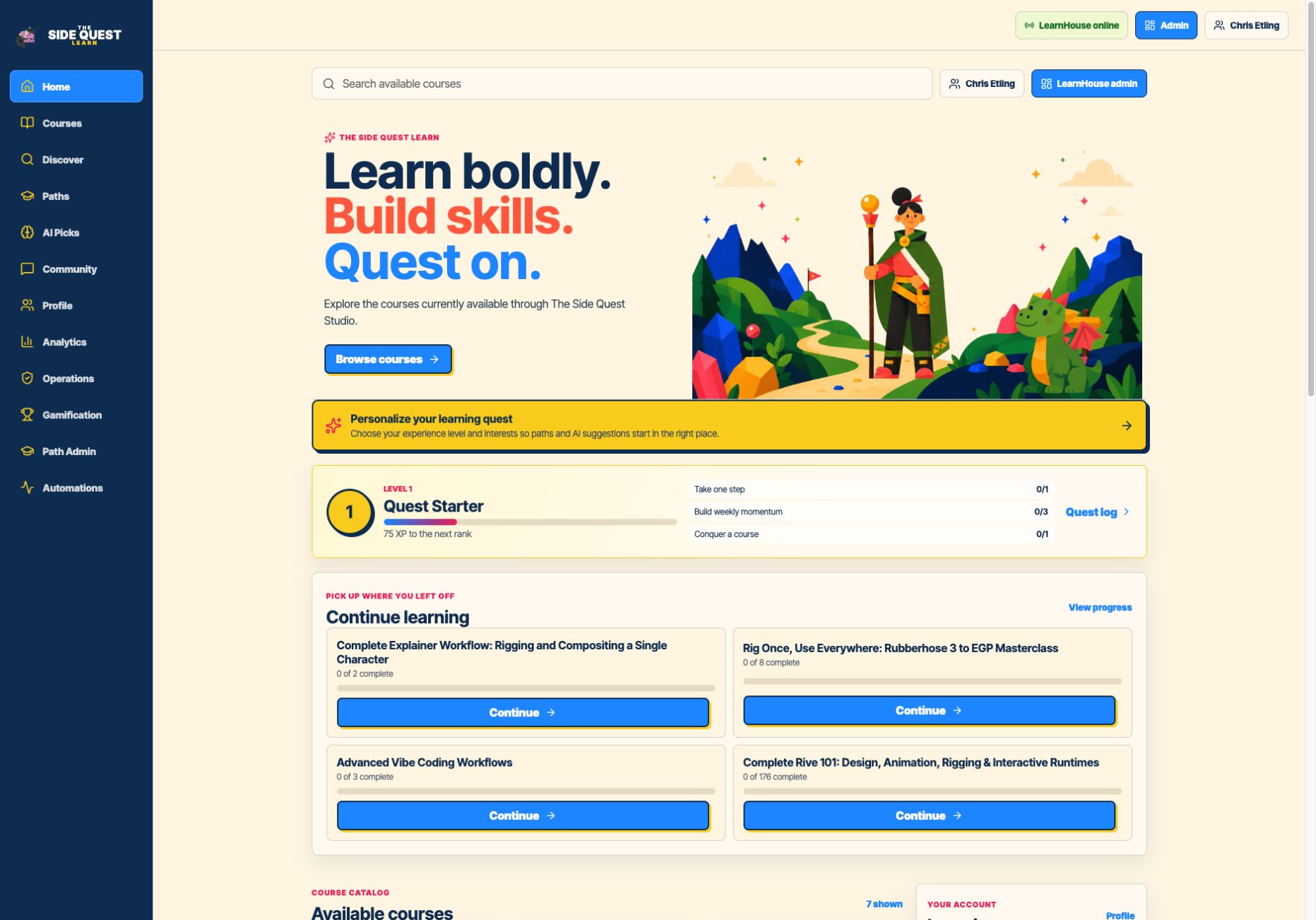
SideQuest Learn combines a public course catalog with learner accounts, progress and course activities on a LearnHouse foundation. Its course catalog offers a concrete example of a custom learner interface. The case study explains the product layer and the boundaries around the underlying platform.

Define the useful signal

Decide which actions would change a learning or operational decision before collecting events. Completion, revisits or a specific practice result can be useful when their meaning is clear. Personal messages, confidential inputs and unnecessary identity fields should not become analytics payloads.

Selected work

Working examples and project stories

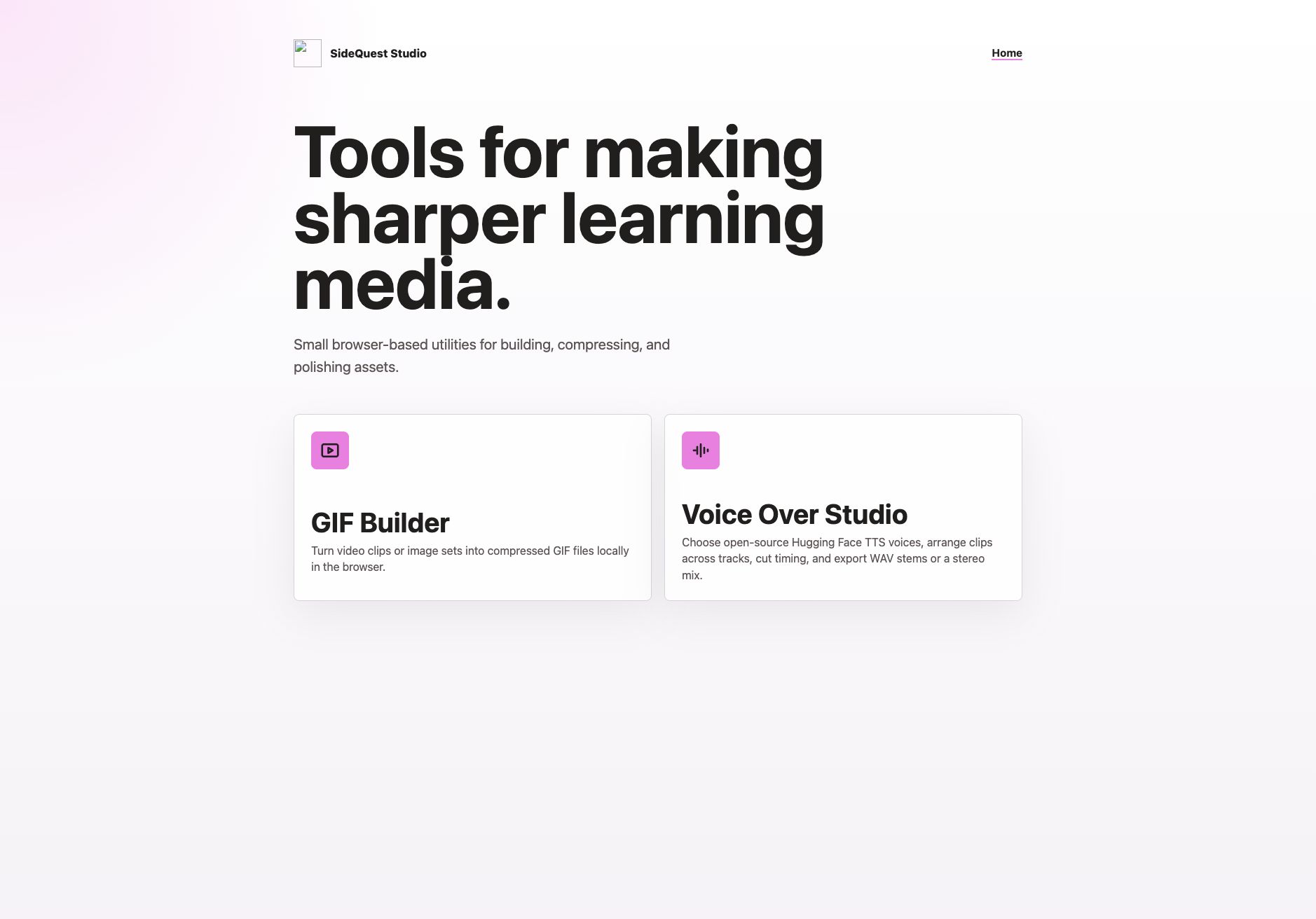
BetaSideQuest Studio browser tools directory
Developer tools · Automation · Voice

SideQuest Tools

Small utilities that remove friction from creative work.

Browser-based builders for GIF creation, voice workflows, and other practical learning-media tasks.

LiveLexle Wordle-style learning game builder
Learning · Games · Storyline

Lexle

Turn a vocabulary challenge into a portable learning game.

Build, test, and export a Wordle-style experience with Storyline-compatible result handling.

Frequently asked questions

Useful details before we talk

Do you build complete learning management systems?

SideQuest Studio can build focused learning platforms and custom layers, but will reuse a sound foundation when that is more responsible than rebuilding commodity LMS features.

Can you connect existing tools?

Yes when stable APIs or supported integration points exist. The first step is mapping data ownership, authentication, failure behavior, and what must remain private.

What makes a custom tool worth building?

A custom tool is strongest when it removes a repeated bottleneck, preserves a distinctive workflow, or makes important decisions easier—not when it merely duplicates a generic form.

Can analytics be added later?

They can, but defining meaningful actions early produces better data and avoids collecting sensitive or useless fields by accident.

Bring the real problem

Let’s make the useful version.

A short brief about the audience, the job they need to do, and what is getting in the way is enough to begin.

Contact Chris