

Update · September 26, 2026
EchoForge is now a character playground. Start with Mochi, Orbit, or Sprout, mix original parts, try reactions, save a character in this browser, and record an animated WebM take. Rive powers the characters, stage, and animated interface elements.
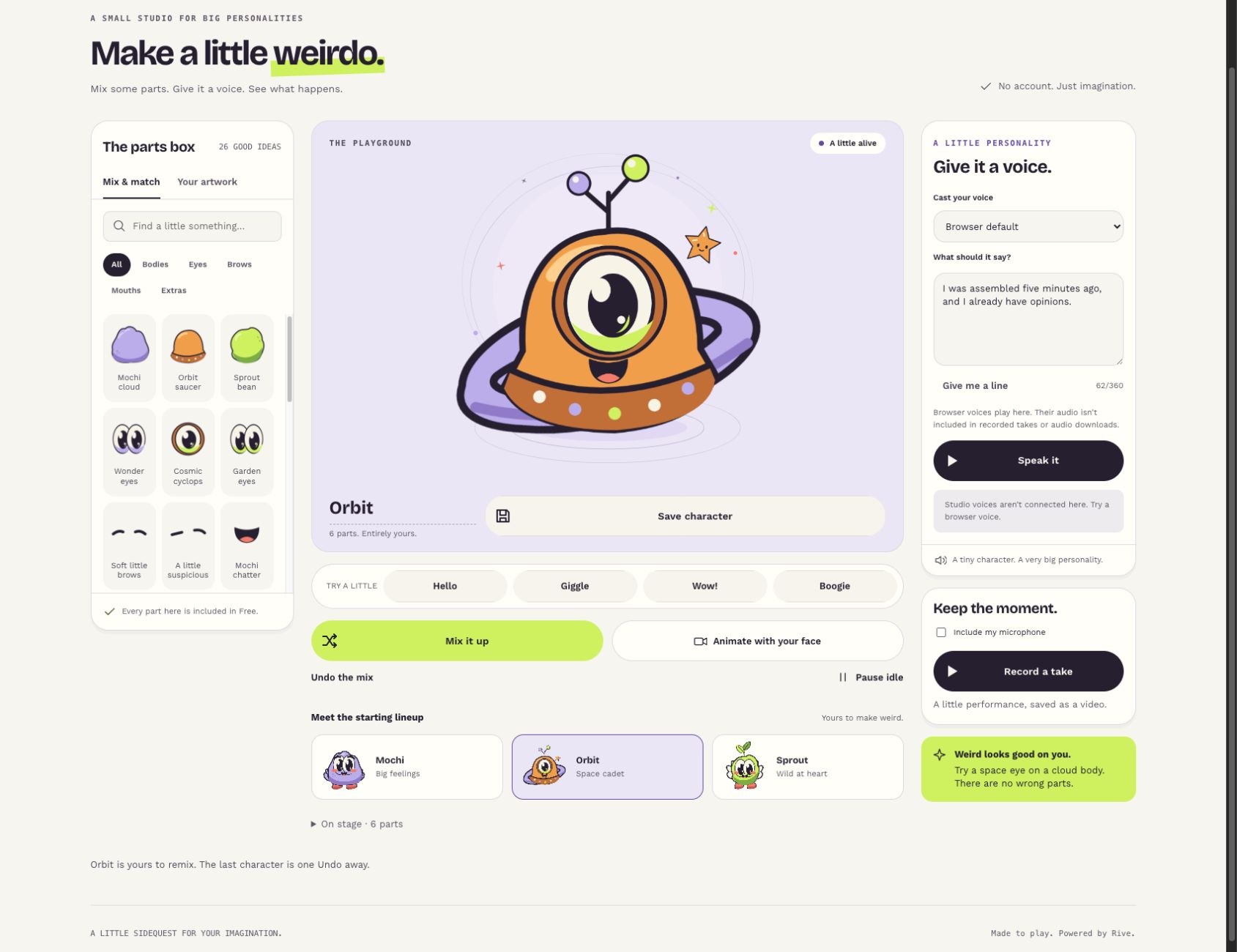
The hosted free beta offers browser voice previews. Those voices play on the device and are not included in recorded takes. Paid plans, Voice Credits, and hosted interactive publishing remain planned. Read the current EchoForge case study for the present scope.
The original June build note follows, and the hero image above shows that earlier version. Both describe the earlier voice lab and its architecture, not the current playground’s feature set. The separate Voice Over Studio remains the legacy audio-editing tool.
A voice model is only one part of the workflow
Character delivery also depends on the line, direction, pacing, sample management, tuning, approval, and the relationship between a character record and its reusable outputs. EchoForge organizes those pieces around characters rather than presenting a loose collection of provider controls.
Public previews, protected operations
Visitors can explore approved characters and cached samples without receiving administrative access. Provider credentials, privileged generation, private candidates, usage controls, and publishing actions remain on protected server routes.
- No provider key in browser bundles
- Approved cached samples for public listening
- Private review records for unfinished candidates
- Explicit publish controls instead of automatic exposure
Direct the performance before polishing it
Direction and post-processing solve different problems. Text direction shapes the intended delivery before generation. Speech-to-speech and audio processing can polish a source performance, but they should not be presented as a replacement for the original direction and timing decisions.
Name future capability honestly
The application contains future-facing voice-conversion profile hooks, but those hooks are not treated as a public production capability. Marking an integration as future work is better than turning a technical placeholder into a product claim.